
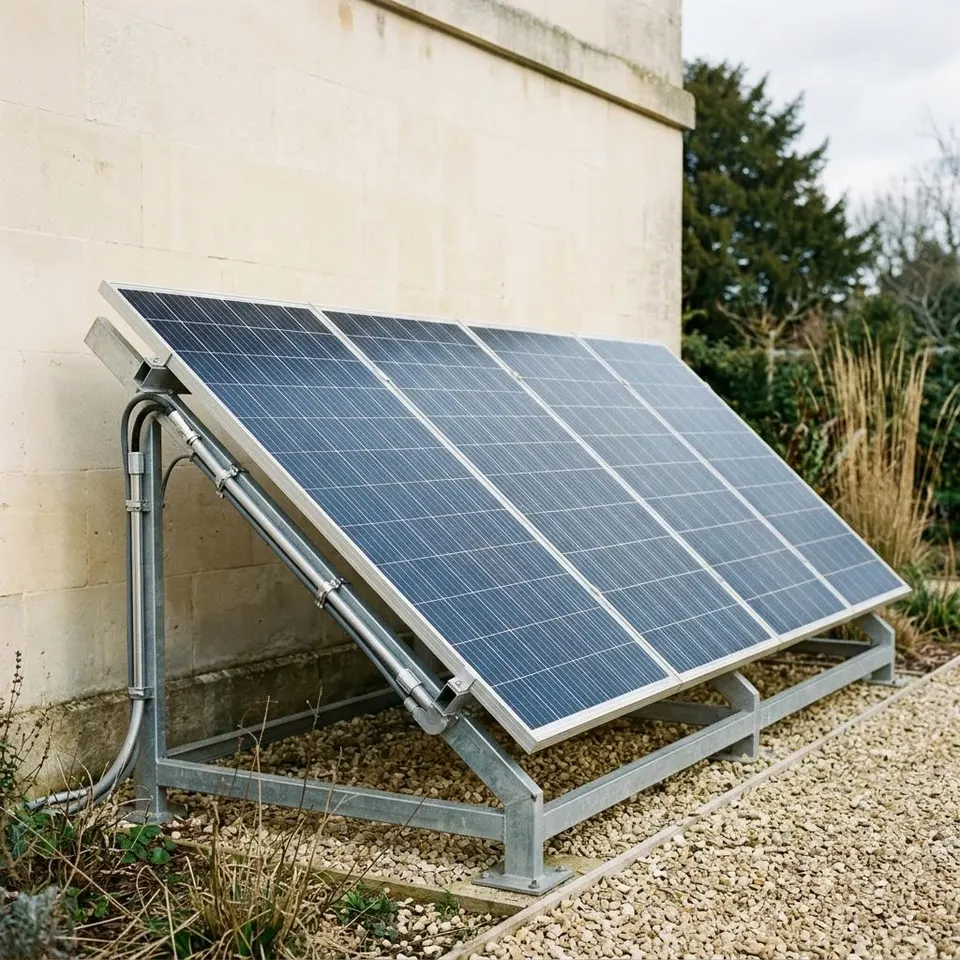
Solar PV

Roof or ground panels that turn daylight into electricity your home uses first.

  • New builds
  • Retrofits
01 / How it works

How it works.

Daylight
PanelsDC
InverterDC to AC
Homeused first
Batterysurplus
Gridexport
  1. 01Light hitting silicon cells knocks electrons loose, creating direct current (DC).
  2. 02Cells are wired into panels and panels into strings. An inverter converts the DC to the AC your building runs on.
  3. 03The home uses its own solar first. Surplus charges a battery or is exported to the grid.
  • Use on site first
  • Fewer grid units
  • Less price exposure

NoteSummer-heavy output; winter imports remain.

02 / Benefits and design considerations

What it does.
What we design around.

What it does for the home

  • Care homes use power all day, every day, so a well-sized system can use much of its output on site.
  • Every unit of solar you use on site displaces a unit bought from the grid.
  • Generated power is less exposed to market price rises.

What we design around

  • Roof orientation and tilt: south yields most; east-west spreads output across the day.
  • Shading from trees, chimneys and neighbouring buildings; optimisers can limit the effect on a string.
  • Seasonality: summer produces far more than winter, so winter imports remain. Larger systems need network operator approval.
03 / Our solar principle

Maximise useful solar.
Then decide where it goes.

First reduce avoidable heating demand. Then fill suitable, productive roof space, rather than leaving useful space empty to make a quote smaller.

Illustrative exampleA sunny day: 100 kWh generated, shared in this order.
  1. 1Use in the home50.0 kWhof 50 wanted£12.0024.0p / kWh
  2. 2Boost hot-water storage25.0 kWhof 25 wanted£5.7022.8p / kWh
  3. 3Charge electric vehicles25.0 kWhof 35 wanted£6.0024.0p / kWh
  4. 4Charge battery storage0.0 kWhof 30 wanted£0.0021.6p / kWh
  5. 5Export to the grid0.0 kWhwhat is left£0.0012.0p / kWh
Avoided spending£23.70
Export income£0.00
Total a day£23.70
Against starting order£0.00

NoteIllustrative. 100 kWh in a day; import 24p and export 12p per kWh; limits of 50 kWh home, 25 hot water, 35 EV, 30 battery; battery 90% round trip, heat 95% retained, hot water heated by immersion. Whole-day energy, not half-hourly timing. Not a forecast or sizing calculation.

04 / What we fit

The equipment.

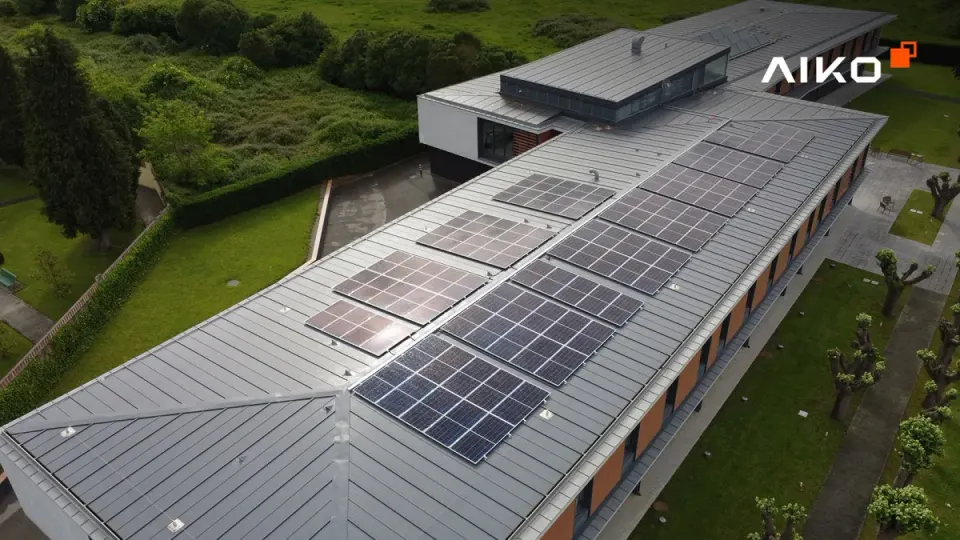
Image: AIKO

Solar PV panels · Neostar example

AIKO

The panels turn sunlight into electricity. Roof structure, shading, orientation and the available area determine the panel choice and layout; an inverter then converts their output for use in the building.

AIKO: official information(opens in a new tab)
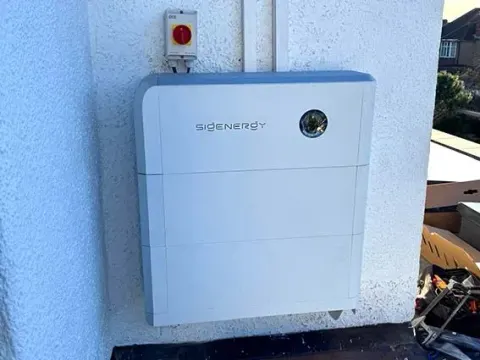
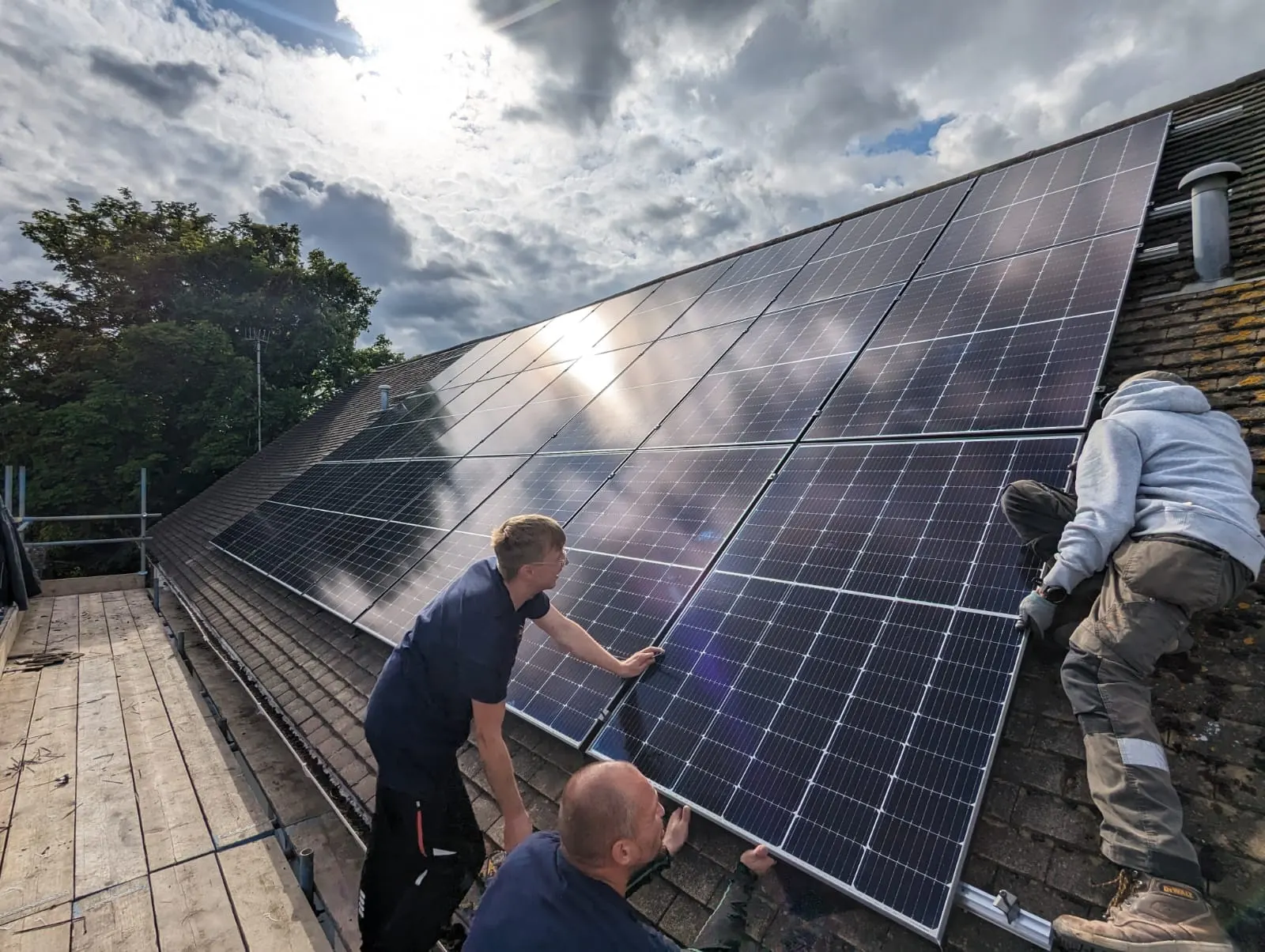
Image: Sigenergy

SigenStor energy controller and battery storage

Sigenergy

Converts solar power and stores surplus electricity in a modular system. This is the inverter and storage equipment, not the manufacturer of the AIKO panels. Battery capacity and electrical compatibility are designed for the home.

Sigenergy: official information(opens in a new tab)

NoteManufacturers are selected for each project; final models depend on the design.

05 / On site
Fitting panels to a pitched roof, working from scaffolding.Our team · Installation photo
Next step / Define the brief

Bring your bills and your building plans.

Talk to our team