
Passive and active cooling
Passive cooling uses a suitable cool ground loop; active cooling runs a refrigeration compressor. Both need a designed way to take heat out of the rooms.
- New builds
 Illustrative image
How it works.
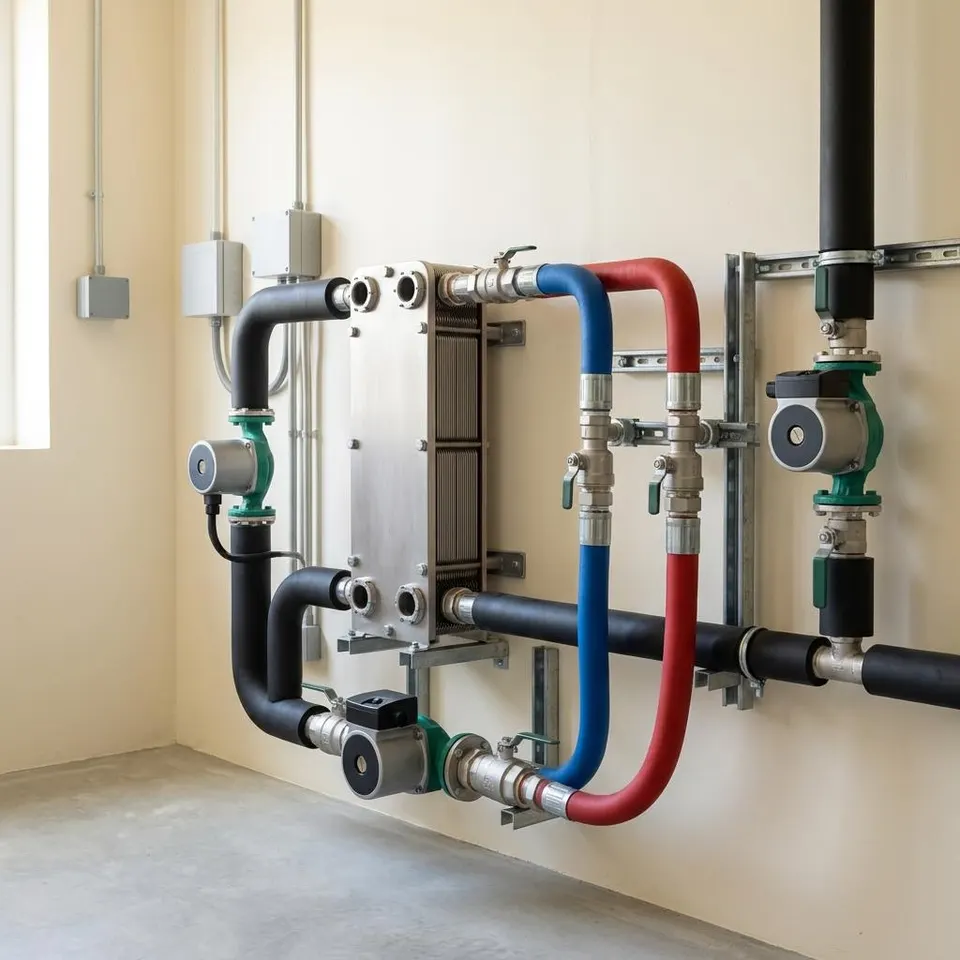
- 01Passive ground cooling transfers room heat through a heat exchanger into a cooler ground loop. Circulation pumps and, for MVHR delivery, ventilation fans use electricity; no compressor is needed for that cooling.
- 02Heat can be collected through suitable wet underfloor circuits or a designed MVHR supply-air cooling coil.
- 03Active cooling uses a reversible heat pump or air-conditioning compressor to produce chilled water or cool air. Suitable floor circuits or MVHR coils can also deliver actively produced cooling.
- 04Heat returned to the ground may support winter performance, depending on ground conditions, extraction and recharge; this is not guaranteed.
- Passive ground cooling
- Floor or MVHR delivery
- Modest cooling
NoteDew-point controls protect floors. Active cooling may be needed when passive capacity is insufficient.
What it does.
What we design around.
What it does for the home
- Passive cooling can provide gentle temperature relief with low electricity use.
- Suitable wet floor circuits can provide heating in winter and cooling in summer.
- A designed MVHR cooling coil can temper the fresh air supplied to rooms.
What we design around
- Passive capacity depends on ground temperature, floor area, airflow, humidity and summer heat gains; it may not meet the full cooling demand.
- Dew-point controls protect cooling floors from condensation. Cooling coils and pipework need suitable insulation and drainage where required.
- Floor cooling does not dehumidify rooms. Active cooling may be needed in hotter conditions or where passive capacity is insufficient.
- Ground recharge and its effect on winter performance are subject to design.
Same rooms. Two ways to remove heat.
The difference is how cooling is produced, not whether it comes through the floor or the ventilation.
Passive cooling
No compressor running for coolingA suitable ground loop absorbs heat from the building through a heat exchanger. Circulation pumps, and MVHR fans where used, still use electricity.
Rooms → floor pipes / MVHR coil → ground
Gentle cooling with low electricity use. Capacity depends on ground temperature, airflow, floor area and humidity.
Active cooling
A refrigeration compressor runsA reversible heat pump or air-conditioning system uses electricity to produce chilled water or cool air and reject the heat outside or into the ground.
Compressor → cooled water or air → rooms
Can provide more cooling when passive capacity is not enough, but normally uses more electricity for the same cooling.
MVHR ventilation
A designed, ground-fed cooling coil tempers the fresh supply air. Ordinary MVHR is not air conditioning: summer bypass only uses cooler outdoor air when conditions allow.
Wet underfloor circuits
Suitable water-filled floor pipes can absorb room heat in summer. Floor finishes, water temperatures and humidity set the safe cooling output. Electric underfloor heating cannot do this.
NotePassive cooling is not air conditioning. Dew-point controls keep cooling floors above the temperature at which moisture condenses; floor cooling does not dehumidify the room.