
Ground-source heat pumps

The same heat-pump principle, drawing from a ground temperature that barely moves.

  • New builds
  • Retrofits
01 / How it works

How it works.

Ground looptrench or borehole
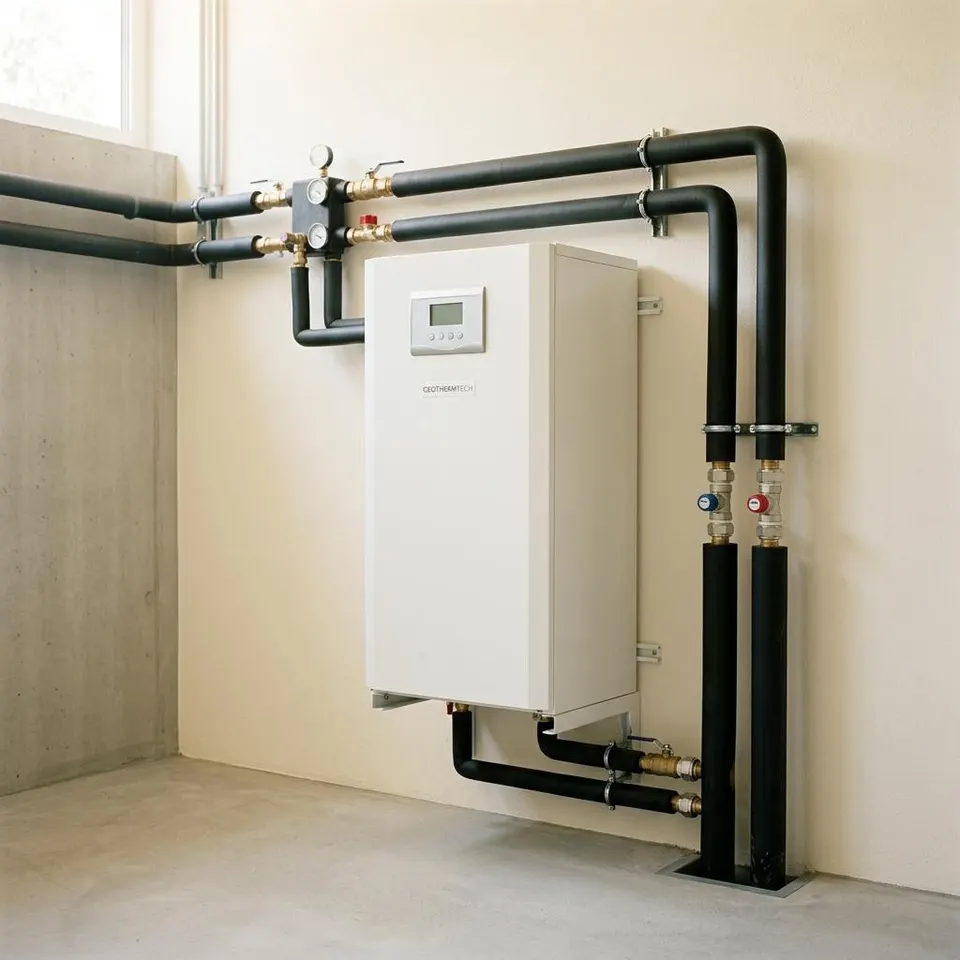
Heat pumpindoors
Building heating
  1. 01A sealed loop of pipes carries fluid through the ground to collect heat.
  2. 02Horizontal loops are laid in trenches across open land. Boreholes are vertical holes drilled deep, with a small footprint.
  3. 03The heat pump unit indoors raises that heat to the temperature needed for the building.
  • Stable source in cold snaps
  • Quiet outside
  • Long-lived loops

NoteHigher install cost; survey sizes the loop.

02 / Benefits and design considerations

What it does.
What we design around.

What it does for the home

  • A stable source: efficiency holds up in cold snaps better than air.
  • Our like-for-like comparisons use assumed SCOP 3.5. Ground-source performance still depends on the ground loop, design and operation; the assumption is not a guarantee.
  • No outdoor fans, so quiet outside, and long-lived ground loops.

What we design around

  • Higher installation cost because of trenching or drilling.
  • Horizontal loops need a large area of unused land; boreholes suit tight sites, even under a car park.
  • Ground conditions and loop sizing are design matters settled by survey.
03 / What we fit

The equipment.

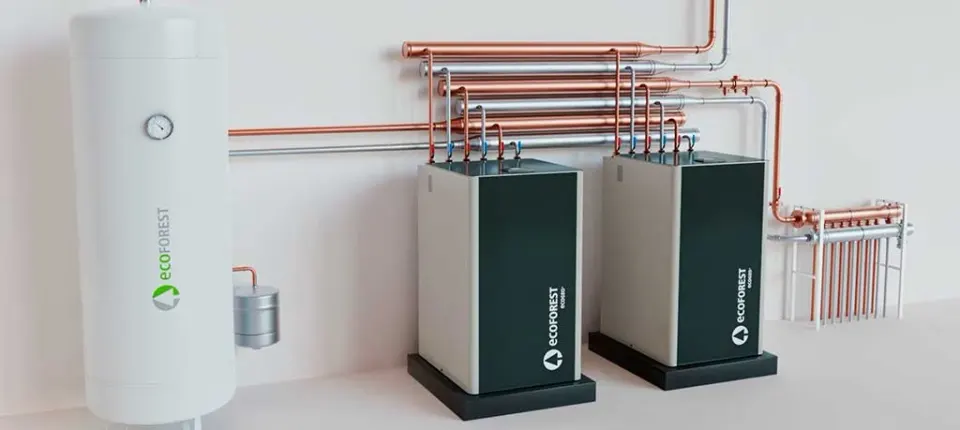
Image: Ecoforest

ecoGEO ground-source heat pumps

Ecoforest

Indoor heat-pump equipment linked to a designed ground collector or borehole system. Plant-room space, ground conditions, collector capacity and the home’s heating demand set the final specification.

Ecoforest: official information(opens in a new tab)

NoteManufacturers are selected for each project; final models depend on the design.

Next step / Define the brief

Bring your bills and your building plans.

Talk to our team